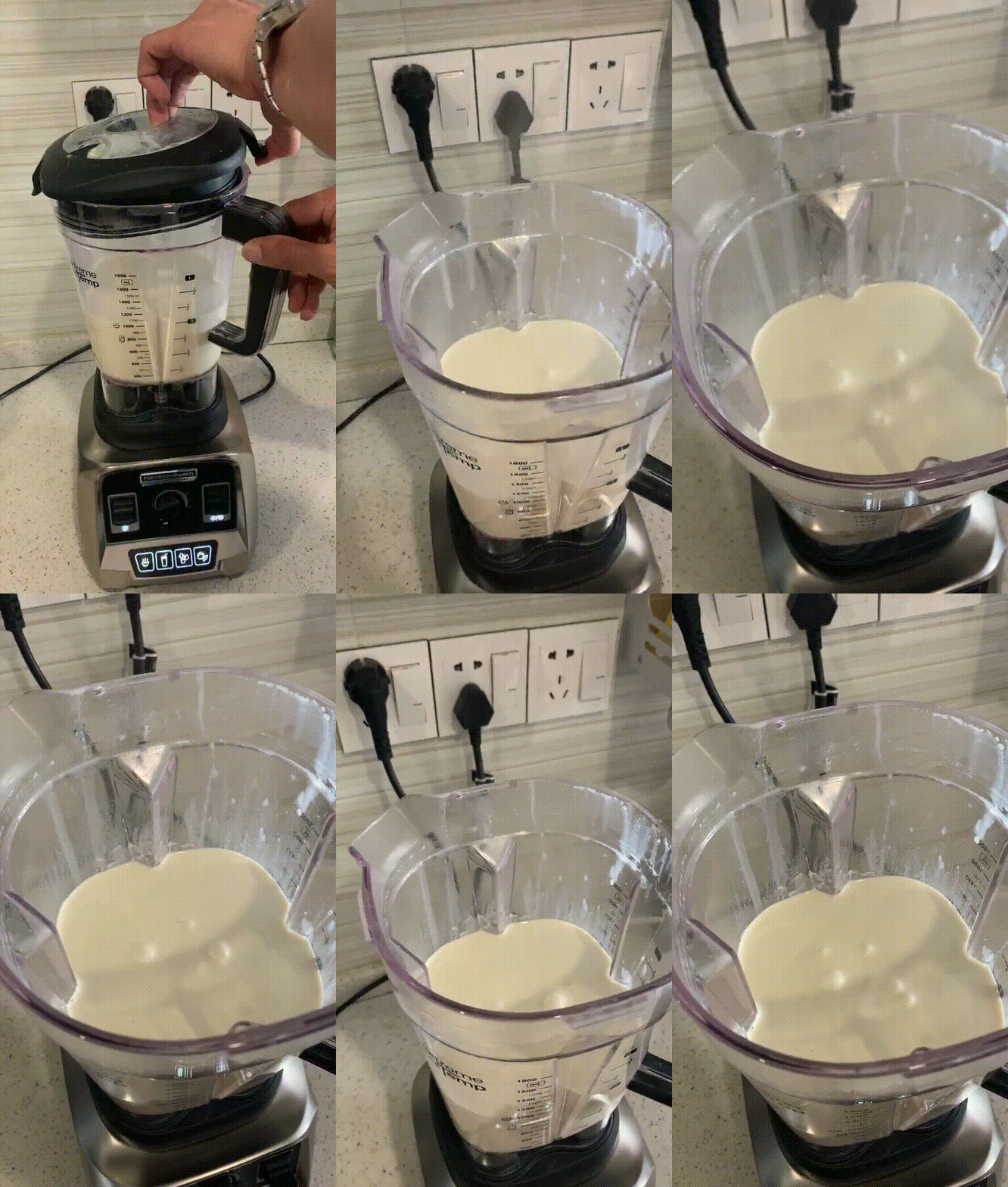
Rather, it involves the cumulative effect of multiple stressors encountered during actual use.
"Hot blending" is redefining the material requirements for kitchen appliances.
In high-speed cooking blenders, the environment in which materials must perform is far from simple.
They are subjected to a complex combination of challenges, including:
👉 Boiling liquids (approx. 100°C)
👉 High-speed rotation (20,000–30,000 RPM)
👉 Steam and pressure
👉 Fats, oils, and acidic ingredients
👉 Frequent and prolonged use
It is not merely a matter of "heat resistance."
👉 Rather, it involves the cumulative effect of multiple stressors encountered during actual use.
Over time, conventional transparent plastics may suffer from:
• Stress cracking induced by fats, oils, and high temperatures
• Performance degradation through repeated use
• Compromised structural integrity
The core question, therefore, is:
👉 Can a material remain stable even after undergoing more than 10,000 "hot blending" cycles?
With the evolution of regulations—such as EU Regulation 2024/3190—material selection can no longer be limited to simply being "BPA-free."
Materials must offer:
✔ Long-term stability
✔ Resilience within the actual operating environment
✔ Consistent, reliable performance
👏👏 👏 Advanced transparent PA12 (the BEIANDE® 7267 series) is specifically engineered to meet these challenges, offering:
• High thermal stability
• Exceptional resistance to stress and fatigue
• Superior chemical resistance
• Reliable, long-term performance
Because in "hot blending" applications:
💪 Safety should not be measured by a single use alone—
💪 It must be proven to withstand the test of over 10,000 cycles.